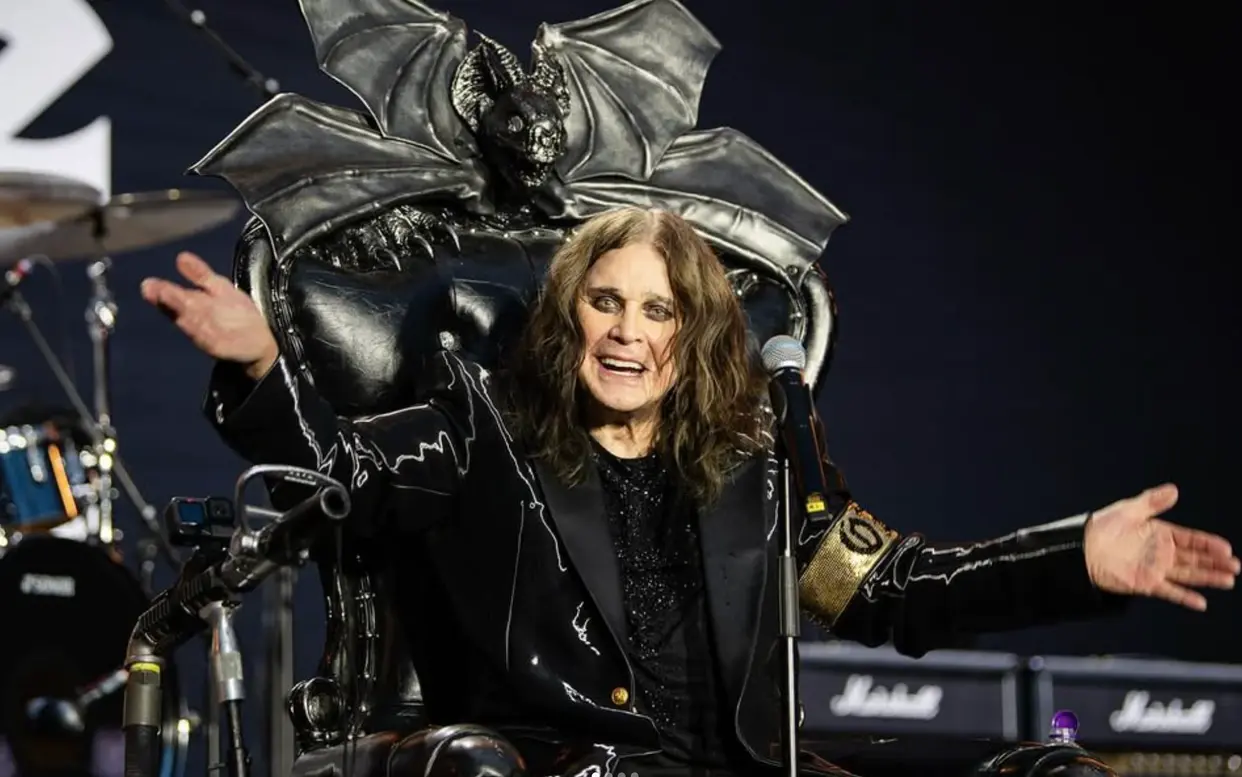
R.I.P Ozzy Osbourne

Black Sabbath
Black Sabbath was formed in Birmingham, England in 1968 by Ozzy Osbourne (vocals), Tony Iommi (guitar),
Geezer Butler (bass), and Bill Ward (drums). Growing up in a rough, industrial city still recovering from
World War II, the band members were heavily influenced by the bleakness of their environment. Originally
starting as a blues-rock band, they soon shifted toward a darker, heavier sound inspired by horror movies and
the reality of working-class life. This unique approach led them to create what many consider to be the first
true heavy metal music.
Their 1970 debut album, Black Sabbath, introduced a new sound that was slower, heavier, and darker
than anything that had come before. That same year, they released Paranoid, which included legendary
tracks like "War Pigs," "Iron Man," and "Paranoid" itself. These albums, along with Master of Reality
and Vol. 4, solidified Black Sabbath's reputation as pioneers of a new genre. Their music combined
haunting guitar riffs, philosophical and often apocalyptic lyrics, and an atmosphere of dread and power that
stood in stark contrast to the psychedelic rock of the time.
Despite their success, the band struggled with internal conflicts and substance abuse throughout the 1970s. In
1979, Ozzy Osbourne was fired due to his drug and alcohol problems. He went on to have a highly successful
solo career, while Black Sabbath brought in Ronnie James Dio as their new vocalist. This marked a new era for
the band, with a more polished and melodic sound, showcased in albums like Heaven and Hell. Although
the band went through numerous lineup changes over the years, Tony Iommi remained the consistent driving force
behind Black Sabbath’s sound and vision.
In 2013, the original lineup (minus Bill Ward) reunited for their final studio album, 13, which
returned to the heavy, doom-laden style of their early work. The album was well-received and marked a powerful
conclusion to their career. In 2017, Black Sabbath officially ended their journey with a farewell tour titled
“The End.”
Over the course of nearly five decades, Black Sabbath laid the foundation for heavy metal and influenced
countless artists across multiple genres. Their innovative sound, dark themes, and uncompromising attitude
changed the face of rock music forever, earning them a place as one of the most important and influential
bands in music history.

Back To The Beginning

John Michael “Ozzy” Osbourne was born on December 3, 1948, in Aston, a working-class district of Birmingham, England.
Raised in a modest home with five siblings, Ozzy grew up in a tightly packed household where money was always tight, and luxuries were few.
His father, Jack Osbourne, worked night shifts as a toolmaker to support the family, while his mother, Lillian, worked at a factory during the day.
Life in post-war Birmingham was bleak and gritty, and Ozzy’s early years were filled with hardship and struggle.
He dealt with dyslexia and bullying at school, and often felt like an outsider — misunderstood and underestimated.
However, he had a natural flair for performance, frequently making his classmates laugh with antics and impressions.
His nickname “Ozzy” stuck early on, given to him by classmates as a twist on his last name.
Music became Ozzy's escape from the dullness and difficulties of his surroundings.
At around the age of 14, he heard The Beatles’ song “She Loves You” on the radio, which profoundly changed his life.
He later said that hearing The Beatles made him want to become a rock star. It gave him a sense of purpose, a dream to hold onto,
and a burning desire to rise above his circumstances.
Inspired by their success, he began listening obsessively to rock and roll records and started experimenting with music himself.
After leaving school at 15, he floated between various jobs — including stints as a construction worker, trainee plumber, and even a burglar,
which landed him in jail for a short time. Still, the idea of making music never left him.
Eventually, he joined a local band, and after some trial and error, he met guitarist Tony Iommi, drummer Bill Ward, and bassist Geezer Butler.
The four would go on to form Black Sabbath, fusing heavy blues with dark, ominous themes to invent what would later be known as heavy metal.
But it all began with a boy in a bleak industrial town, dreaming of something louder, something bigger, and something entirely his own.
Solo Career
Despite being the iconic voice of Black Sabbath and helping to pioneer the heavy metal genre, Ozzy Osbourne's tenure with the band was marked by increasing personal struggles, particularly with drug and alcohol addiction. By the late 1970s, his substance abuse had severely impacted his ability to perform consistently and contributed to growing tensions within the band. These issues culminated in 1979 when the band made the difficult decision to dismiss Ozzy from the group, a shocking and painful moment for both the band and fans worldwide. This firing was a significant turning point in Ozzy’s life and career, as he suddenly found himself without the band that had brought him fame and success.
Rather than succumbing to despair, Ozzy was determined to rebuild his life and career on his own terms. With the support of his new manager, Don Arden, he quickly began assembling a solo band that could help him forge a fresh musical identity. One of the most crucial figures to join him during this period was the exceptionally talented young guitarist Randy Rhoads. Rhoads' classical training and innovative playing style helped define the sound of Ozzy's solo work, combining technical proficiency with a raw, heavy metal edge that captivated listeners.
In 1980, Ozzy released his debut solo album, Blizzard of Ozz, which marked a triumphant return to the music scene. The album was a commercial and critical success, featuring now-classic tracks like “Crazy Train” and “Mr. Crowley,” both of which showcased Ozzy’s distinctive vocals and Rhoads’ groundbreaking guitar work. The album’s dark, theatrical themes and powerful instrumentation helped establish Ozzy as a solo artist capable of standing on his own, apart from Black Sabbath’s legacy.
Tragically, the early years of Ozzy's solo career were also marked by personal challenges, including the sudden death of Randy Rhoads in a plane crash in 1982. Despite this heartbreaking loss, Ozzy persevered, recruiting new band members and continuing to produce influential albums such as Diary of a Madman and Bark at the Moon. His solo work combined the heavy, doom-laden roots of his Black Sabbath days with a more polished, theatrical style that helped popularize metal to a wider audience.
Throughout the 1980s and beyond, Ozzy’s solo career was a rollercoaster of highs and lows, with ongoing struggles with addiction and public controversies, but his resilience and dedication to music remained unwavering. His ability to reinvent himself and stay relevant in an evolving music landscape solidified his status as the “Prince of Darkness” and a true metal legend. Ozzy's solo success also opened doors for collaborations with a variety of musicians, extensive touring, and the eventual reunion with Black Sabbath in later years, proving that his impact on rock and metal music was both profound and enduring.

Musical Impact

John Michael “Ozzy” Osbourne left an indelible mark on the world of music, revolutionizing the heavy metal genre and inspiring countless artists across generations.
His distinctive voice, theatrical stage presence, and fearless approach to music helped define what it means to be a rock legend.
As the frontman of Black Sabbath, Ozzy helped pioneer a darker, heavier sound that contrasted sharply with the popular rock music of the early 1970s.
The band’s innovative use of ominous riffs, haunting lyrics, and a brooding atmosphere set the foundation for what would become heavy metal.
Beyond his work with Black Sabbath, Ozzy’s solo career further expanded his influence, showcasing his versatility and willingness to experiment with new sounds.
Albums like Blizzard of Ozz and Diary of a Madman introduced audiences to groundbreaking guitar work and songs that became anthems for metal fans worldwide.
Ozzy's impact also extended beyond music to popular culture, where his persona as the “Prince of Darkness” became iconic.
His struggles with addiction and his ability to overcome personal demons added a raw authenticity to his artistry, endearing him to fans.
Over decades, Ozzy influenced not only musicians but entire subcultures, helping heavy metal evolve into a global phenomenon.
His legacy is reflected in the countless bands that cite him as an inspiration and the ongoing relevance of his music in both mainstream and underground scenes.
More than just a singer, Ozzy Osbourne transformed the musical landscape with his passion, innovation, and enduring spirit, securing his place as one of rock’s most legendary figures.
Legacy
Ozzy Osbourne’s legacy extends far beyond his groundbreaking work as the voice of Black Sabbath and his successful solo career.
As a pioneer of heavy metal, he helped shape a genre that would influence generations of musicians and fans around the world.
His raw, powerful voice and theatrical persona became synonymous with metal’s rebellious spirit and dark allure.
Ozzy’s impact is not just musical but cultural. He broke barriers with his wild stage antics, larger-than-life personality, and candid openness about his struggles.
This vulnerability endeared him to millions and made him a symbol of perseverance in the face of adversity.
From his early days in Birmingham to global superstardom, Ozzy embodied the rock star archetype while also humanizing it.
His influence can be seen in the countless artists who cite him as an inspiration—from heavy metal titans to alternative and even pop musicians.
The “Prince of Darkness” helped legitimize heavy metal as a lasting and respected art form, bringing it from underground clubs to sold-out arenas worldwide.
Beyond music, Ozzy’s presence in popular culture—from reality TV to charity work—has kept him relevant across multiple generations.
His enduring persona, combined with his willingness to evolve and experiment musically, ensures his place as an icon not just in metal but in the broader history of rock music.
Ultimately, Ozzy Osbourne’s legacy is one of innovation, resilience, and influence.
He transformed the sound and spirit of rock music forever, proving that even the wildest dreams can endure through passion and dedication,
inspiring countless fans and musicians along the way.